
- Home
- Hearing Aids
- Types of Hearing Aids
Types of Hearing Aids
At Direct Ear Care, we offer a wide range of hearing aids to suit every need, from invisible models to custom-made options.

Different Type of Hearing Aids
Within these two categories, there are different styles available, each designed to suit various needs. The right style depends on factors such as hearing loss, ear shape and size, manual dexterity, and personal preference. Our audiologist will work closely with you during your appointment to find the hearing aid that best suits your needs.
Below, we outline what to consider when choosing a hearing aid, along with the pros and cons of each hearing aid style.
What are the Different Styles of Hearing Aids?
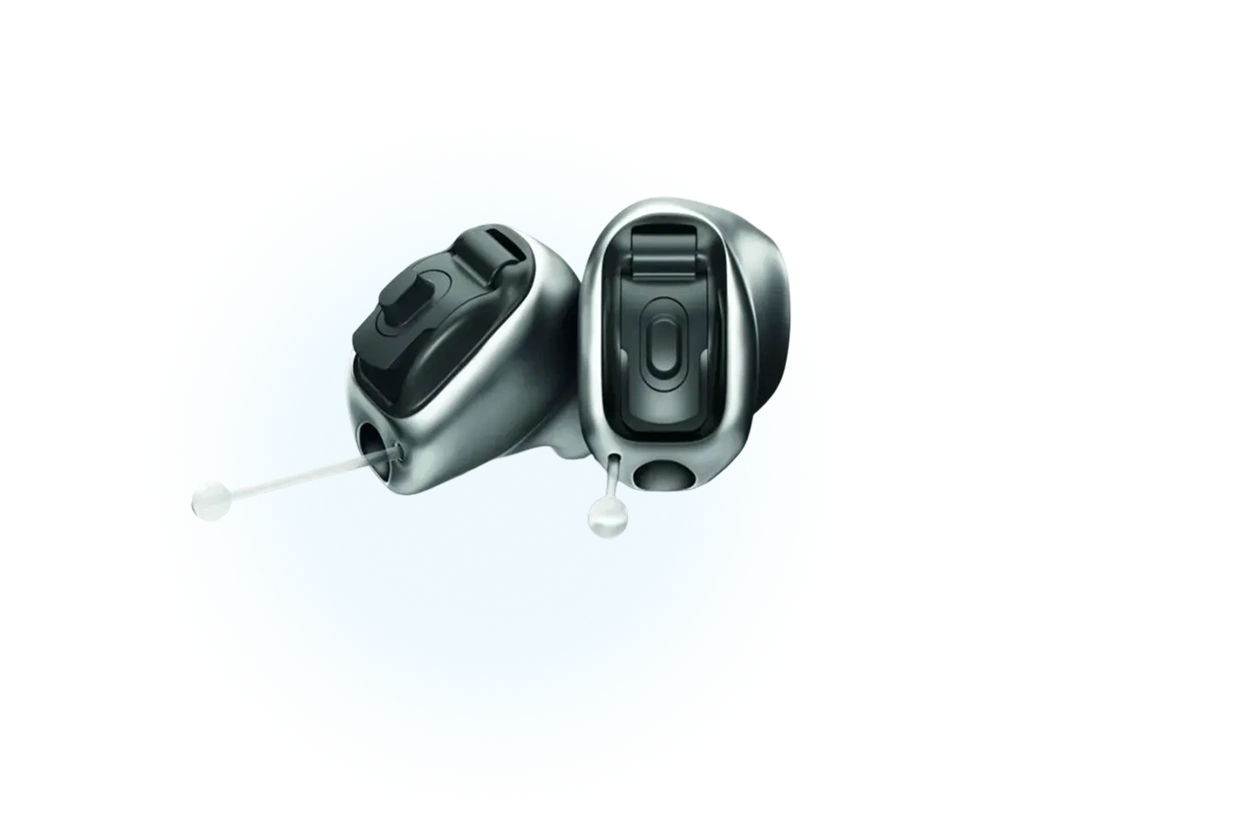
Invisible-in- Canal (IIC) Hearing aids
Best For:
- Those who want a discreet look and custom hearing aid.
- Individuals with mild to severe hearing loss
Pros
- Small, lightweight and nearly invisible
- Custom-made for a comfortable fit
- No tubes or external wires
- Provides natural sound quality
- No interference with glasses
- Can use headphones and phones normally
Cons
- Requires frequent battery changes
- Not suitable for all levels of hearing loss
- May not be ideal for those with vision or dexterity issues
- Limited features compared to larger models
- No rechargeable option available
- Not suitable for all ear canal shapes
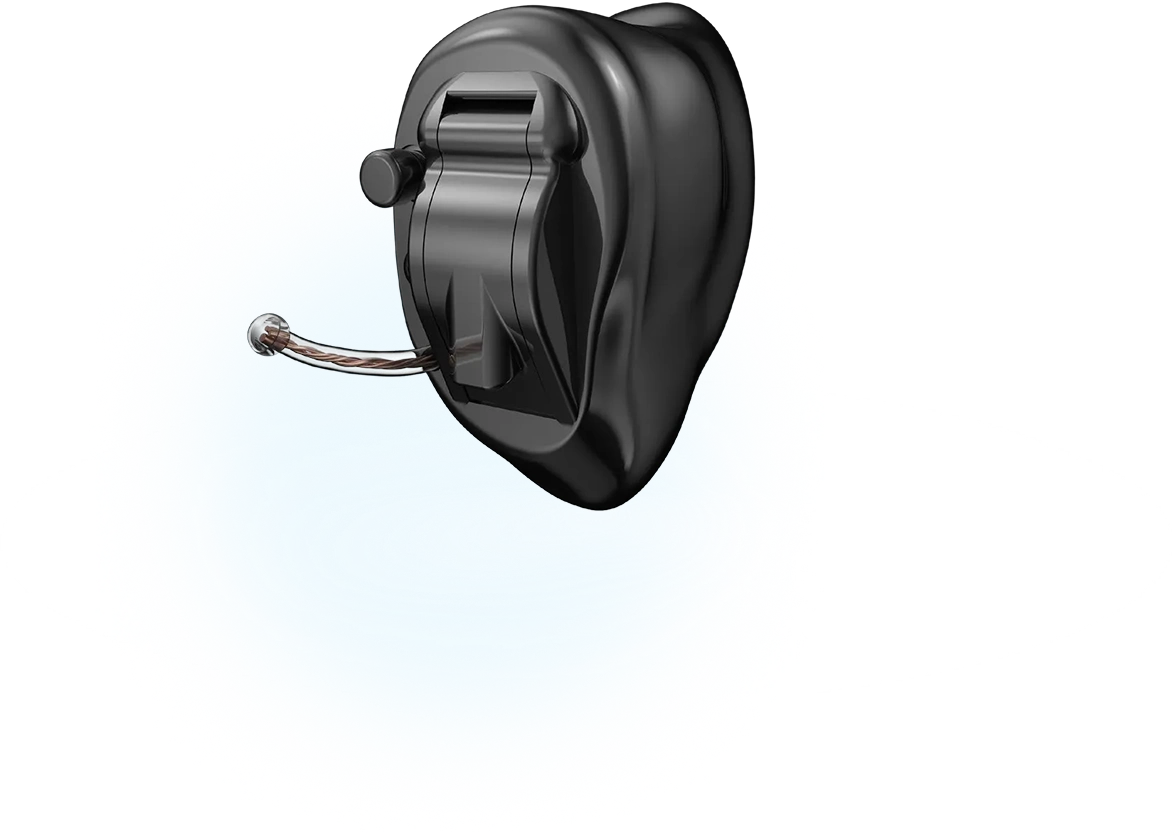
Completely-in-canal (CIC) hearing Aids
Best For:
- Those who want a discreet look and custom hearing aid
- Individuals with mild to severe hearing loss
Pros
- Very discreet, designed to be virtually unnoticeable
- Custom-made for a comfortable fit
- Includes volume, telecoil, and program buttons
- Can use headphones and phones normally
- Provides natural sound quality
Cons
- Battery powered
- Not suitable for all hearing losses
- Limited features compared to larger models
- Not ideal for people with dexterity issues
- Can be vulnerable to ear wax and moisture build-up
- Not suitable for all ear canal shapes
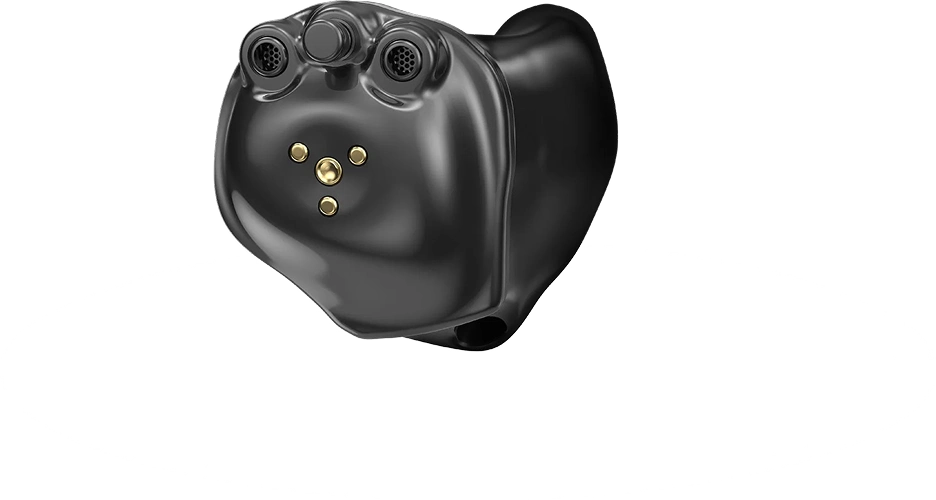
In-the-Canal (ITC) Hearing Aids
Best For:
- Those who want a custom hearing aid
- Want an all-round hearing aid performance for rechargeability and Bluetooth connectivity
- Those with dexterity or vision issues.
- Individuals with mild to profound hearing loss
Pros
- Easy to handle
- Discreet, but slightly visible
- Custom-made for a comfortable fit
- Bluetooth technology available
- Rechargeable options available
- Includes volume, telecoil, and program buttons
- Longer battery life compared to smaller hearing aids
- Can use headphones and phones normally
Cons
- Less discreet than smaller custom hearing aids
- Not suitable for profound hearing loss
- May require regular cleaning
- May not be suitable for those with narrow ear canals
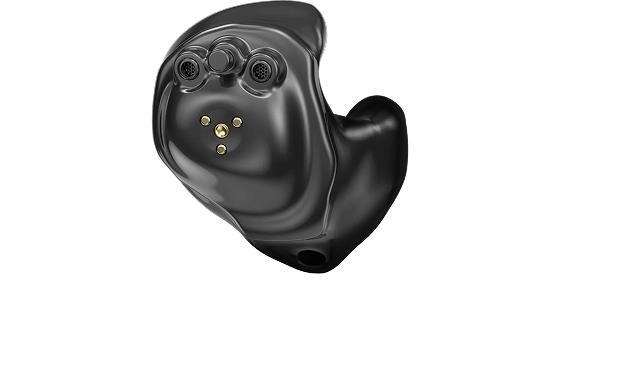
In-the-Ear (ITE) Hearing Aids
Best For:
- Those who want a custom hearing aid
- Want an all-round hearing aid performance for rechargeability and Bluetooth connectivity
- Those with dexterity or vision issues.
- All levels of hearing loss from mild to profound.
Pros
- Easy to handle due to their size
- Custom-made for a comfortable fit
- Ideal for those with dexterity and/or vision problems
- Bluetooth technology available
- Rechargeable options available
- Includes volume, telecoil, and program buttons
- Longer battery life compared to smaller hearing aids
Cons
- Less discreet than smaller custom hearing aids
- May require regular cleaning
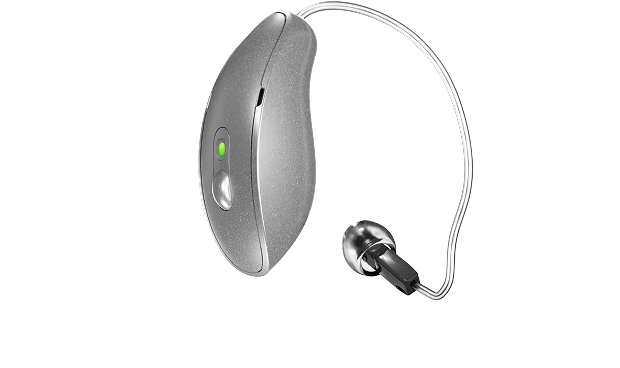
Receiver-in-Canal (RIC) Hearing Aids
Best For:
- Individuals who want all round hearing aid performance for rechargeability and Bluetooth connectivity
- All levels of hearing loss from mild to profound.
Pros
- Small and very discreet
- Comfortable and lightweight
- Bluetooth technology available
- Available in rechargeable
- Durable and long-lasting
- Suitable for all types of hearing loss
- Provides clear and natural sound quality
- Includes volume, telecoil, and program buttons
Cons
- Sits behind the ear
- May not be suitable for those with dexterity or vision problem
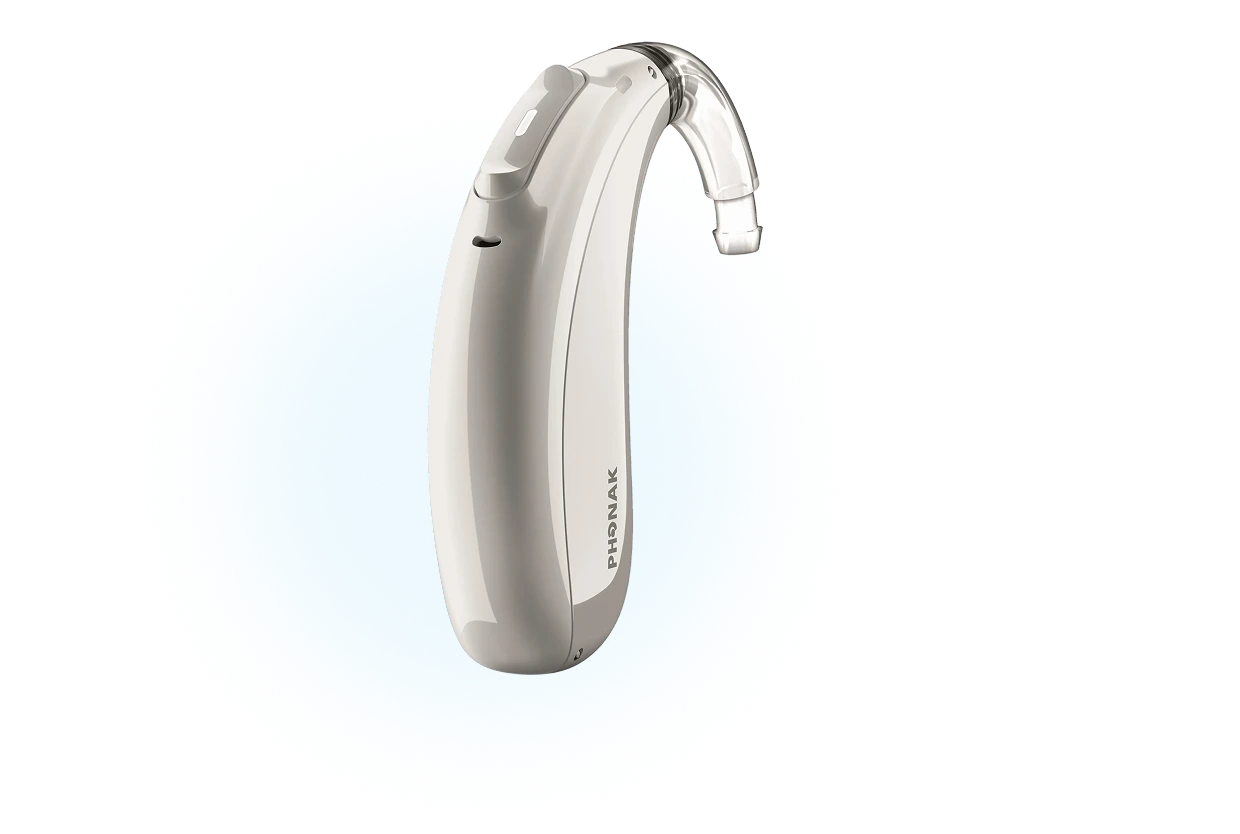
Behind-the-ear (BTE) hearing aids
Best For:
- Individuals who want all round hearing aid performance for rechargeability and Bluetooth connectivity
- All levels of hearing loss from mild to profound.
Pros
- Easy to handle
- Comfortable to wear
- Available in rechargeable
- Bluetooth technology available
- Suitable for all types of hearing loss
- Includes volume, telecoil, and program buttons
- Durable and versatile
- Less prone to earwax and moisture damage
Cons
- More visible than other styles
- Can interfere with glasses
- Sensitive to wind noise
- Requires regular cleaning
Key Hearing Aid Features to Consider
Rechargeable Batteries
No need to change batteries, simply charge your hearing aids overnight and wake up to full power for the entire day. Rechargeable hearing aids are both convenient and environmentally friendly.
Bluetooth Connectivity
Connect your Bluetooth hearing aids to your smartphone and for hands-free phone calls, stream music, audio and control the hearing aids through an app. Also connect to other Bluetooth devices.
Telecoil (T-Coil)
Allows you to connect the hearing aids to the hearing loop systems in public places.
Automatic Adjustment
Adapts to different environments without manual control.
Noise Reduction & Directional Microphones
Improves speech clarity in noisy environments.
Try Hearing Aids for 60 Days – 100% Risk-Free
Top Hearing Aid Feature
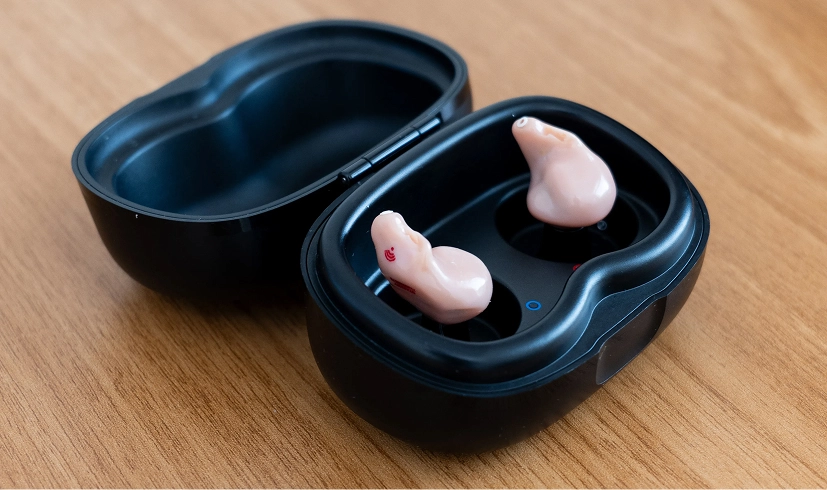
Rechargeable Hearing Aids
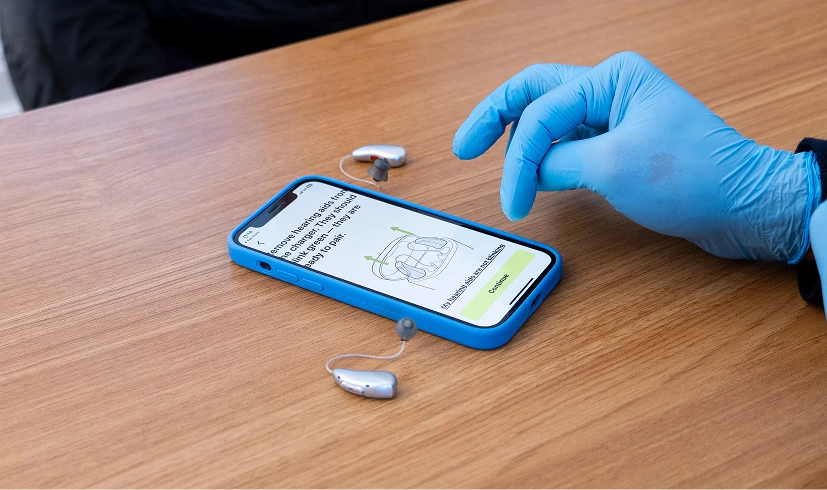
Bluetooth Hearing Aids
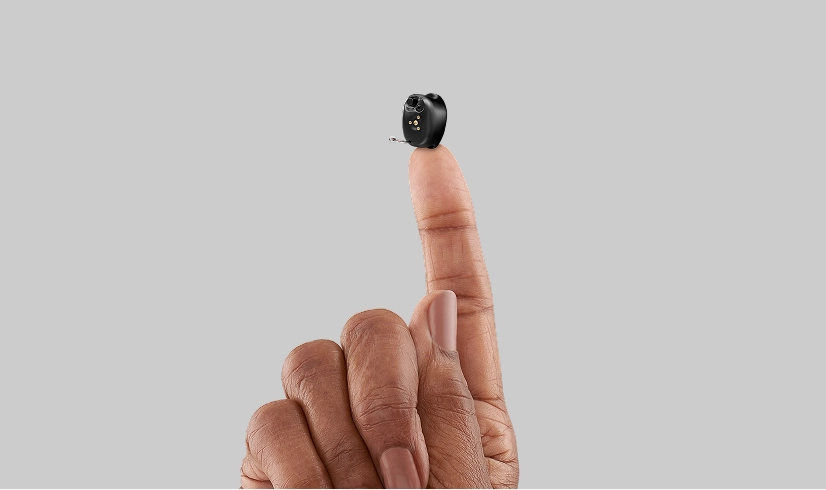
Invisible Hearing Aids
When are hearing aids needed?
How much do hearing aids cost?
Hearing aid prices vary depending on the technology and aftercare package. We offer a variety of options to suit different budgets.
Find out more about hearing aids prices
How long do hearing aids last?
Most hearing aids last 5-6 years with proper care. Regular maintenance and check-ups can extend their lifespan.
Can I try hearing aids before buying?
Yes! We offer a 60-day money-back guarantee on all hearing aids. If you’re not completely satisfied, you can return them for a full refund.
What’s the most discreet hearing aid available?
Invisible-in-Canal (IIC) hearing aids AND Completely-in-Canal (CIC) are the smallest and most discreet option. They fit deep inside the ear canal, making them nearly undetectable.