There is a particular kind of frustration that comes with hearing loss not just the physical difficulty of not hearing clearly, but the feeling of slowly drifting from the people around you. You miss the punchline of a joke. You nod along in conversations you cannot fully follow. You stop contributing because you are not sure what was just said.
Over time, these moments add up. What begins as a minor inconvenience becomes something that quietly affects your relationships, your confidence, and your sense of connection with the people who matter most.
Hearing aids will not restore perfect hearing. But for most people with hearing loss, they make a profound difference not just to how well you hear, but to how fully you participate in the conversations and moments that make up everyday life. This guide explains how, and what to consider if you think hearing aids might be the right step for you.
How Hearing Loss Affects Everyday Conversations
Hearing loss tends to creep in gradually that many people do not notice it until others around them do. By the time it starts affecting conversations, it has usually been building for some time.
The conversational challenges that come with hearing loss are specific and consistent:
- Difficulty following conversations in groups or noisy environments.
- Mishearing words and responding to something different from what was said.
- Frequently asking people to repeat themselves — and feeling embarrassed doing so
- Mental exhaustion after social situations from the effort of trying to follow along.
- Gradually withdrawing from conversations and social settings to avoid the difficulty
The Emotional and Social Impact
Untreated hearing loss has real and well-documented effects beyond the physical difficulty of not hearing clearly. People with significant untreated hearing loss commonly experience:
- Social withdrawal and growing feelings of isolation
- Frustration, embarrassment, and reduced confidence in social situations
-
Increased risk of dementia
- Strain on close relationships particularly with partners where miscommunication becomes a persistent source of friction.
- Higher rates of depression linked to reduced social engagement.
- Mental fatigue from the sustained cognitive effort of trying to compensate for reduced hearing.
What Hearing Aids Actually Do
Hearing aids are small electronic devices that help people suffering from hearing loss listen clearly. Modern devices do far more than simply make things louder and understanding this distinction is important.
Simply increasing volume does not help if the problem is clarity rather than volume. Most hearing loss involves difficulty distinguishing certain frequencies particularly higher-pitched sounds and consonants. This is why someone with hearing loss might hear the speech but struggle to make out the words.
Modern hearing aids address this by:
- Enhancing speech clarity specifically amplifying the frequencies that are hardest to hear for that individual.
- Reducing background noise so speech is easier to separate and follow.
- Focusing on the person in front of you rather than picking up all sound equally
- Adapting automatically to different environments adjusting settings between a quiet room, a busy restaurant, and a phone call without manual intervention
- Connecting to smartphones and other devices allowing calls and audio to stream directly to the hearing aid
Modern Hearing Aids vs Older Devices
Feature | Older Hearing Aids | Modern Hearing Aids (Direct Ear Care Approach) |
Sound Quality | Basic amplification (everything louder) | Clear speech enhancement with background noise reduction |
Noise Handling | Struggles in noisy environments | Advanced noise filtering for better conversations in crowds |
Directionality | Picks up sound from all directions equally | Directional microphones focus on the person speaking |
Comfort & Fit | Generic fit, often uncomfortable | Custom-fitted for your ear and lifestyle |
Design | Bulky and noticeable | Discreet, sleek, often invisible |
Technology | Limited or no smart features | Digital processing, adaptive sound environments |
Personalisation | One-size-fits-all settings | Tailored to your specific hearing loss profile |
User Experience | Requires constant manual adjustments | Automatic adjustments based on surroundings |
Support & Care | Minimal follow-up | Ongoing support, adjustments, and expert guidance from Direct Ear Care |
Connectivity Devices | None | Streams directly to smartphones and other |
6 Ways Hearing Aids Improve Conversations with Loved Ones
1. Clearer Speech Understanding. Less Guessing, More Listening
Hearing loss does not always reduce volume, it distorts clarity. Words blur together, consonants disappear, and following a sentence requires filling in gaps constantly. Modern hearing aids target the specific frequencies that are hardest for you to hear, making speech clearer and more distinct. Instead of guessing and hoping for the best, you can follow the conversation properly without the mental effort of trying to reconstruct it.
2. Fewer Misunderstandings and Less Need to Repeat
Mishearing words leads to mismatched responses, confused conversations, and the frustration of repeatedly asking people to say things again. For the people around you, being asked to repeat themselves constantly becomes tiring can lead to shorter, less meaningful exchanges. Hearing aids reduce these gaps in communication, making conversations flow more naturally for everyone involved.
3. Improve social confidence
One of the most consistent things people with hearing loss report is a loss of confidence in social settings. When you cannot reliably follow what is being said, it becomes easier to say less, withdraw from group conversations, or avoid social situations altogether. With hearing aids, the confidence to participate comes back not because the hearing aid does anything to your confidence directly, but because understanding what is being said removes the fear of responding to the wrong thing.
4. Stronger Emotional Connections
Much of emotional communication happens in tone, phrasing, and subtle vocal cues not just the words themselves. When hearing loss makes it hard to pick up these nuances, you can miss the emotional content of a conversation even when you catch the words. Hearing aids restore these aspects of communication.
5. Less Mental Fatigue
Listening with untreated hearing loss is exhausting. Your brain works overtime to fill in the gaps predicting words, watching faces, cross-referencing context. By the end of a social event or a long working day, this sustained effort causes a specific kind of tiredness that goes beyond physical fatigue. Hearing aids reduce this cognitive load significantly. When hearing is clearer, listening requires less effort and you have more energy left for the people you are with.
6. Rebuilding Relationships
With persistent hearing loss, even the closest or strongest of relationships can feel distant. You withdraw from conversations, limit social interaction, and eventually feel disconnected from your loved ones. Hearing aids can reverse this, where you can start to rejoin conversations confidently, communicate clearly, and spend quality time with your loved ones.
7. Easier Phone Calls and Connected Conversations
Phone calls are particularly difficult for people with hearing loss because the visual cues that normally support lip-reading and expression are absent. Most modern hearing aids connect directly to smartphones, streaming calls into the hearing aid at a volume and clarity tailored to your hearing profile. Staying in touch with family and friends by phone something many people with hearing loss quietly stop doing becomes straightforward again.
Signs You Might Need a Hearing Assessment
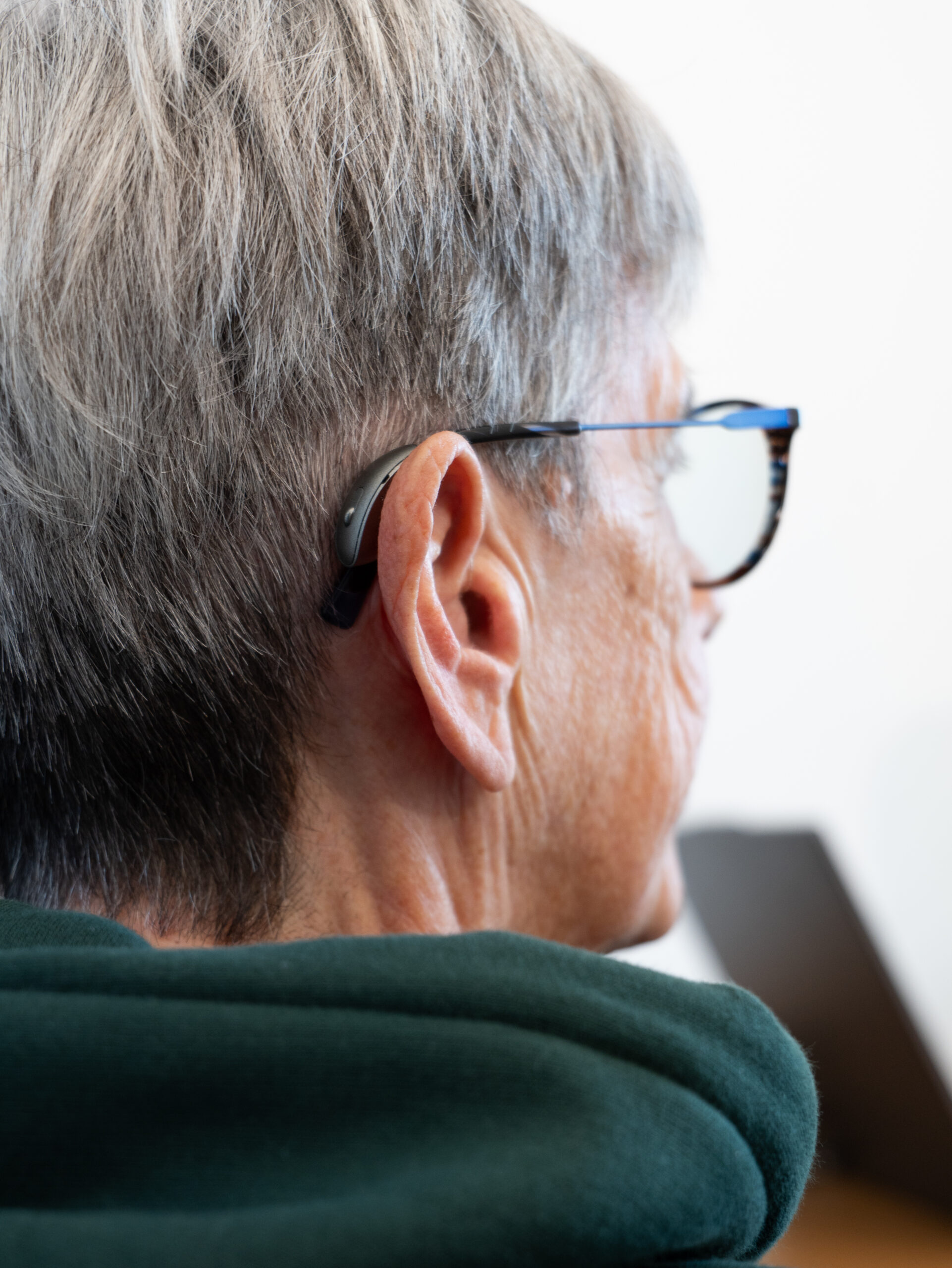
Hearing aids are not something you self-prescribe a professional hearing test identifies the nature and degree of your hearing loss and determines whether a hearing aid is the appropriate solution. But there are signs that suggest a hearing assessment is worth booking:
- You often ask people to repeat themselves, particularly in conversation.
- You find it noticeably harder to hear in quiet environments than you used to
- You have increased the volume on the TV or radio beyond what others find comfortable.
- You struggle to hear high-pitched sounds such as doorbells, birdsong, or children's voices.
- You experience ringing or buzzing in your ears (tinnitus)
- You find yourself avoiding conversations or social situations because of the difficulty.
- Someone close to you has mentioned that your hearing seems reduced.
Choosing the Right Hearing Aid
Use this checklist as a starting point:
- Get a professional hearing assessment first, the results determine which type of hearing aid is appropriate for your specific loss.
- Make sure the device suits your daily life, work environment, social habits, phone use, and whether you are comfortable with a visible or discreet design.
- Confirm what hearing aid aftercare and ongoing support is included with the hearing aids.
- Understand the full cost including fitting, adjustments, and maintenance not just the device price.
- Selecting the right hearing aid brands that can give you the best hearing results
Why Professional Hearing Care Matters

Accurate Diagnosis First
Read about how ear wax can cause hearing loss in our latest article on “Can Earwax Cause Hearing Loss? Facts You Should Know.”
Personalised Fitting and Settings
Ongoing Adjustment and Support
Long-Term Value
What Direct Ear Care Offers
At Direct Ear Care, hearing aid services begin with a thorough professional assessment. The goal is to understand your hearing accurately and recommend only what genuinely suits your needs and lifestyle.
When you come to Direct Ear Care for hearing care, you can expect:
- HCPC-registered audiologists conducting all assessments and fittings.
- A full hearing assessment
- A free hearing aid trial for 2 weeks
- Personalised device selection matched to your specific hearing loss profile, lifestyle, and comfort.
- Ongoing aftercare and fine-tuning support after fitting
- Transparent pricing with no hidden costs
- Hearing aid finance options available
- Home visit appointments for patients who are unable to attend the clinic.
- 60-day money-back guarantee
Conclusion
Hearing loss does not just affect what you can hear it affects how connected you feel to the people around you. Conversations become harder, social situations more draining, and over time, the distance between you and the people you care about quietly grows.
This can be solved with hearing aids. Not by restoring perfect hearing, but by making speech clearer, conversations easier, and social situations less exhausting. For most people with clinically significant hearing loss, the right hearing aid properly fitted and supported makes a genuine and lasting difference to daily life.
The first step is a professional hearing assessment. It takes less than an hour, tells you exactly where your hearing stands, and gives you a clear picture of what your options are — with no pressure and no obligation.
Written and medically reviewed by:

Ibrahim Musa
Audiologist
Frequently Asked Questions
How do hearing aids improve communication in relationships?
What hearing aid features matter most for conversations?
Do hearing aids work in noisy environments like restaurants?
How do hearing aids reduce misunderstandings between partners?
Related posts

How Often Should Adults Have Their Hearing Checked?
Rechargeable Hearing Aids vs Battery Hearing Aids: Which Is Better?