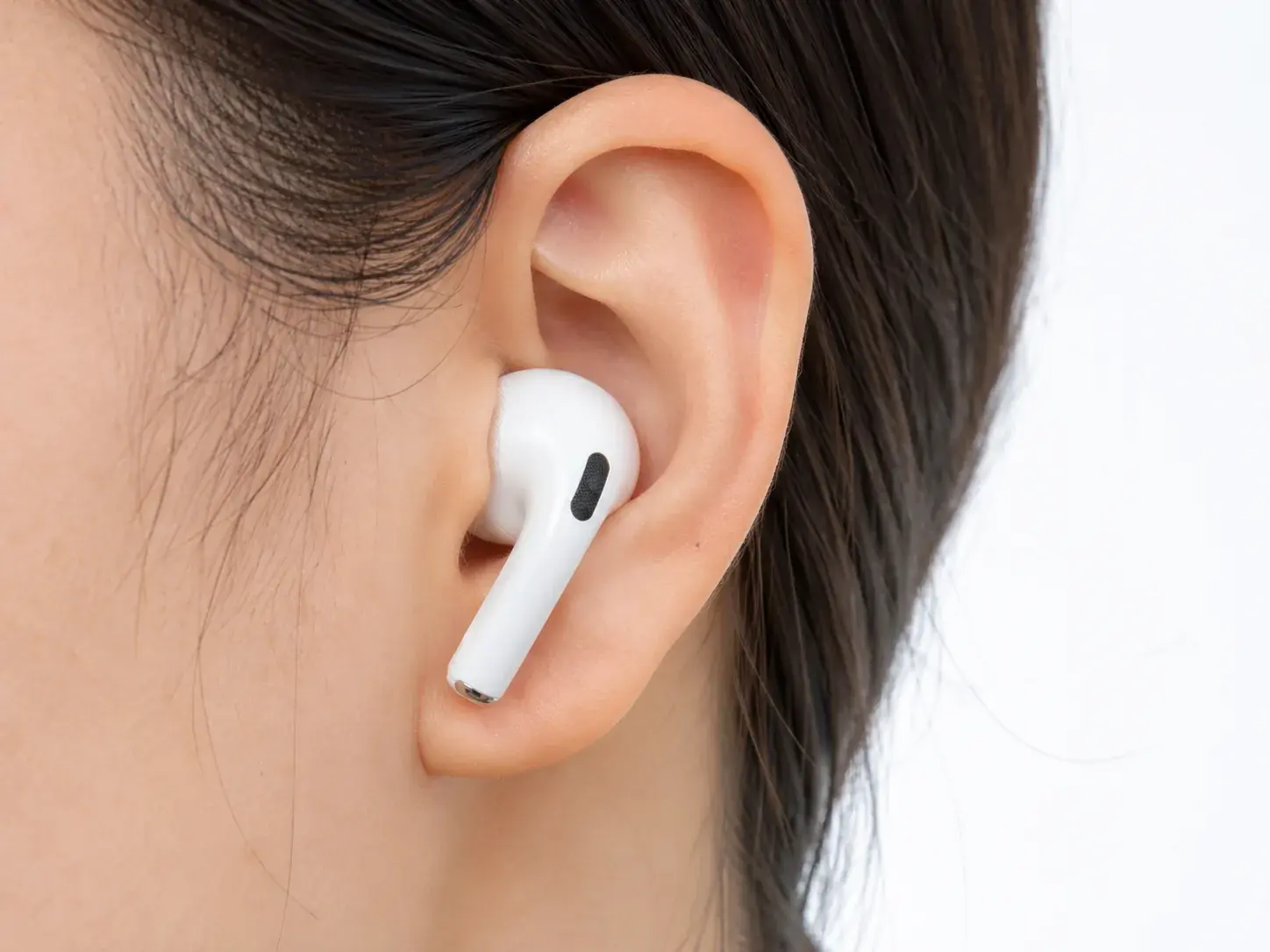
Yes, frequent use of earbuds and AirPods can contribute to earwax build-up in some people. These devices may push wax deeper into the ear canal and obstruct the ear’s natural self-cleaning process, However, not everyone who uses in-ear devices will experience this problem.
This guide explains how earwax works, how in-ear devices might add to build-up, the signs of a blocked ear, habits that may help and when to seek professional earwax removal.
Earwax: What It Does and How Ears Clean Themselves
Earwax (cerumen) is a natural substance made by glands in the ear canal. Many people think it needs regular removal. It actually does several useful jobs:
- Traps dust and debris. It stops particles reaching the eardrum.
- Helps protect against infection. It creates a slightly acidic surface that bacteria and fungi find harder to grow on.
- Keeps the skin moist. It stops the skin inside the ear drying out.
- Carries debris out. Old wax slowly moves towards the ear opening, helped by jaw movements when you talk and chew. It then dries and falls away.
Earwax is not a sign of poor hygiene. Earwax impaction occurs when earwax builds up and becomes difficult to remove naturally. Contributing factors include naturally producing excessive or dry earwax, having narrow ear canals, frequently inserting cotton buds, regularly using hearing aids or in-ear headphones, and certain skin conditions affecting the ear canal.
How Earbuds and AirPods Might Contribute to Earwax Build-Up
Research on earbuds specifically is limited. These are the likely ways in-ear devices could play a part, based on how the ear works and on what is known about hearing aids and earplugs.
- Pushing wax deeper. Putting earbuds in and taking them out can nudge wax further along the canal, where it may pack down. This is more likely with narrow canals or a history of build-up.
- Blocking the way out. An earbud fills part of the canal. Worn for hours, it may get in the way of wax moving outwards, especially if you make a lot of wax.
- Trapping warmth and moisture. In-ear devices can hold in heat and sweat. This doesn’t cause impaction, but it can irritate the skin, especially if the devices aren’t kept clean.
Learn more about the effects of earwax impaction in this blog: “Can Earwax Cause Hearing Loss? Facts You Should Know”
Earbuds vs AirPods: a quick comparison
Feature | Traditional earbuds | AirPods |
Design | Usually feature wired or wireless in-ear components | Available in open-fit and in-ear Pro designs |
Ear canal contact | Often sit inside the ear canal | Depends on the model; in-ear Pro models use silicone tips |
Effect on earwax movement | May interfere with the outward movement of wax | In-ear models may have a similar effect; open-fit models are less likely to |
Hygiene | Requires regular cleaning | Requires regular cleaning |
Potential concerns | Wax buildup, irritation, and discomfort | Wax buildup, irritation, and discomfort (primarily with in-ear models) |
Common Signs of Earwax Build-up
- A blocked or full feeling. Pressure or fullness inside the ear. Earbuds may feel uncomfortable or sit differently.
- Muffled or reduced hearing. Conversations are harder to follow, you turn the television up, or one ear hears less than the other.
- Earache. Hard wax can press on the sensitive skin of the canal.
- Itching. Wax can irritate the skin lining the canal. Don’t scratch inside the ear.
- Ringing (tinnitus) or dizziness. The NHS lists both as possible signs of wax. They can also have other causes, so see the red box above.
Avoid using your fingers or objects like cotton buds to remove earwax, because this pushes it in and makes it worse. If your hearing has changed, get your ears examined. A look inside the ear shows quickly whether wax is the cause.
How to prevent earwax build-up while using earbuds and AirPods
You don’t have to stop using in-ear devices. These habits may help:
- Take regular breaks. Avoid keeping in-ear devices inserted for unnecessarily long periods. Breaks give your ears time away from continuous contact and reduce irritation.
- Choose a comfortable fit. Avoid tips that feel tight or need to go deep into the canal.
- Clean your earbuds. They collect wax, sweat and dust. Follow the manufacturer’s cleaning instructions and make sure devices are completely dry before using them again.
- Keep cotton buds out of your ears. Clean only the outer ear with a soft, damp cloth.
- Think about over-ear headphones if you often get blocked ears or discomfort from in-ear devices.
When to Choose Professional Earwax Removal
Some people get earwax build-up again and again, whatever they do, because of how much wax they make or the shape of their ear canal. If habits and drops haven’t cleared a blockage, a professional is a better next step than trying to dig it out yourself.
At Direct Ear Care, an appointment includes:
- Professional ear examination. Identifies the extent of earwax buildup and determines whether removal is necessary.
- Suitable removal techniques. Depending on your ear condition, professionals may recommend microsuction, ear irrigation, or manual earwax removal.
- Advice. We can suggest ways to manage recurring wax and look after your ears.
- Reduced risk of injury. Professional removal minimises the risk of damaging the ear canal or eardrum through improper cleaning attempts.
- Relief from blockage and discomfort. Removing impacted earwax can help address ear fullness, muffled hearing, and pressure.
- Personalised ear care guidance. Professionals can recommend ways to manage recurring earwax buildup and maintain ear hygiene.
To learn more about when you need a professional ear wax removal, read this blog: “7 Signs You Need Professional Earwax Removal”.
Conclusion
Regularly wearing earbuds and AirPods may contribute to earwax impaction, especially if the devices fit tightly or are inserted often. However, not everyone who uses earbuds will experience earwax problems. Choosing comfortable earbuds, taking regular breaks, keeping devices clean, and avoiding cotton buds inside the ear canal can help support better ear health.
If your ears still feel blocked or your hearing has not improved after trying preventive measures, Direct Ear Care provides professional earwax removal through microsuction and ear irrigation, along with free hearing checks at its Preston clinic.
Frequently Asked Questions
Can wearing earbuds every day cause earwax build-up?
It may in some people, especially if the earbuds fit tightly or are worn for long periods. Daily use doesn’t automatically cause a blockage. The shape of your ear canal, how much wax you make, and the design of the device all play a part. Regular breaks and a comfortable fit help.
Are AirPods more likely to cause earwax build-up than other earbuds?
The style matters more than the brand. In-ear designs with tips that sit in the canal, such as AirPods Pro, are more likely to disturb wax than open-fit designs that rest at the entrance of the ear. There is no good research comparing brands. Your ear shape and how you wear them matter most.
How long can I wear earbuds without risking earwax build-up?
There is no proven safe time limit. Take regular breaks instead of wearing them for hours at a stretch and make sure they fit comfortably without going deep into the canal. If you often get blocked ears or discomfort, wear them less or try over-ear headphones. Keep the volume comfortable too. That protects your hearing and is a separate issue from wax.
What are the early signs of earwax impaction?
A feeling of fullness, mild discomfort, itching, slightly muffled hearing, or one ear feeling more blocked than the other. Some people hear ringing. Get your ears examined rather than trying to remove wax yourself.
Can dirty earbuds cause ear problems?
They may. Earbuds pick up wax, sweat and dust, and dirty tips could irritate the ear canal. Dirty earbuds don’t directly cause impaction. Clean your earbuds regularly according to the manufacturer’s instructions.
Can earwax cause temporary hearing loss?
Yes. Wax can block the ear canal and stop sound reaching the eardrum. Hearing often improves once the wax is removed. But not all hearing loss is caused by wax. If your hearing drops suddenly in one or both ears, ask for an urgent GP appointment or call NHS 111 the same day.
When should I get earwax removed by a professional?
Consider visiting an ear care professional if you experience persistent ear blockage, earache, itching, ringing, or difficulty hearing. Recurring wax buildup may also require assessment, particularly if you have narrow ear canals or a history of impaction. Direct Ear Care can examine your ear canal and determine whether removal through microsuction, irrigation, or manual removal is appropriate.
Written and medically reviewed by:

Ibrahim Musa
Audiologist
Related posts
Why are My Hearing Aids Not Working? Common Problems and Fixes

10 Signs You May Need Hearing Aids