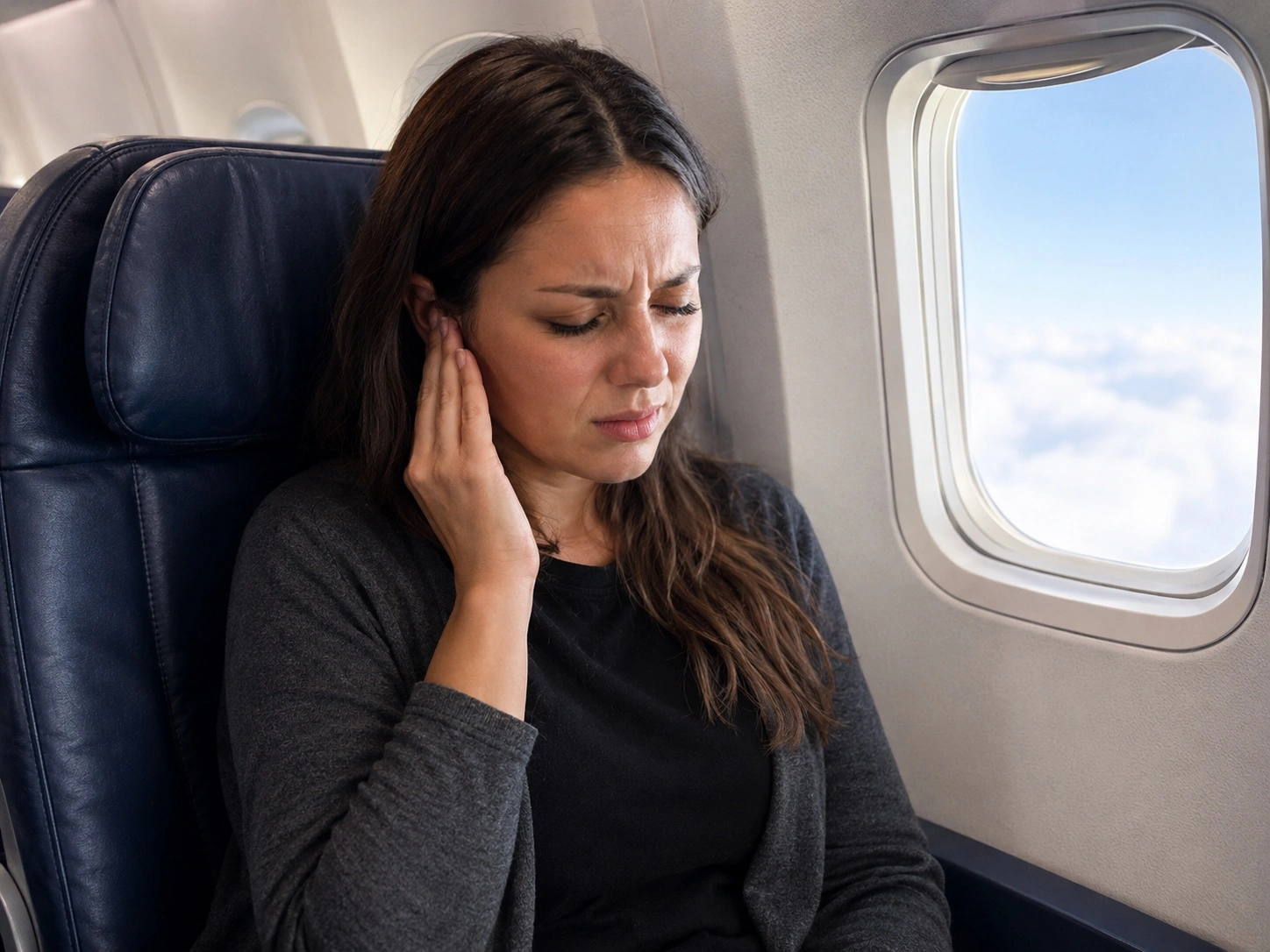
Few things make a flight more uncomfortable than the sudden sensation of blocked ears. One moment your hearing is normal. The next, sounds feel muffled, pressure builds inside your ears, and you may feel mild pain. It is most common during take-off and descent, when altitude and cabin pressure, changes quickly.
This is commonly known as aeroplane ear, and in most cases, it is harmless and temporary. But the discomfort is real and knowing how to relieve it (and when it signals something more) makes a genuine difference.
This guide explains why it happens, how to relieve the pressure during a flight, how to prevent it next time, and when blocked ears after flying need professional attention.
Why Your Ears Feel Blocked on a Plane
Plane cabins are highly pressurised. However, the air pressure maintained inside isn’t the same as that you experience when on the ground. As the plane ascends or descends, the cabin pressure adjusts automatically to match the altitude. Your ears become more sensitive to these shifts as the eardrum requires equal pressure to be maintained on both sides, i.e., between the middle and outer ear.
As the pressure outside the ear’s changes more rapidly than the middle ear, the thin eardrum membrane gets pushed inward or outward. That’s when you start noticing symptoms like fullness, popping, muffled hearing, or subtle discomfort. The greater the pressure difference is, the more intense the sensation.
The Role of the Eustachian Tube
The Eustachian tube is a narrow passage connecting your middle ear to the back of your nose and throat. Its job is to keep the pressure balanced on both sides of the eardrum.
Normally, this tube opens automatically when you swallow, yawn, chew, or talk letting air move in and out of the middle ear to equalise pressure. During take-off and landing, it must work harder. If it cannot open properly, pressure builds up and your ears feel blocked.
Why Some People Suffer More Than Others
Not everyone experiences blocked ears the same way. Several factors affect how easily your ears adjust to altitude changes:
- A cold, allergies, or sinus congestion can make it harder for the Eustachian tube to open
- A naturally narrower Eustachian tube equalises pressure more slowly
- Recent ear infections or inflammation can affect normal ear function
- Excess earwax can make the blocked sensation feel more intense
- Frequent flyers often manage symptoms better through practised techniques
What Blocked Ears During Air Travel Can Feel Like
For most travellers, symptoms are temporary and improve once the pressure equalises after landing. Common symptoms include:
- A feeling of fullness or pressure in one or both ears
- Muffled or reduced hearing, as if the sounds are coming from far away.
- Popping or clicking sensations
- Mild discomfort during take-off or descent.
- The frequent need to swallow, yawn, or chew repeatedly to ease the discomfort.
- A sensation that the ears need to “pop” but won’t.
- Slight dizziness or imbalance in some cases.
Most people feel back to normal within minutes to a few hours of landing. Mild symptoms can occasionally last up to a day.
Read this detailed blog on suddenly blocked ears to learn what you should do immediately so that treatment doesn’t get delayed.
What is Causing the Blocked Sensation?
1. Colds and Congestion
2. Seasonal Allergies and Sinus Issues
3. Earwax Build-Up
Earwax does not cause middle ear pressure directly, but it can make the blocked sensation feel worse by narrowing the ear canal. Temporary hearing changes at altitude can feel more intense as a result. If you are prone to wax build-up, having professional ear wax removal before travelling can help.
Related reading: What Causes Earwax Build-Up and When Should You Get It Removed?
4. Existing Ear Conditions
How to Relieve Ear Pressure During a Flight
1. Swallowing Repeatedly
2. Yawning
Yawning is a natural way to encourage pressure equalisation by opening the Eustachian Tube temporarily. Here’s how:
- Relaxing the muscles around the ears and the jaws
- Helping trapped air move more freely
- Triggering a popping sensation to relieve the trapped pressure
- Working particularly during descent when the pressure changes are maximum
3. Chew Gum
4. ay Hydrated
5. Try Valsalva Manoeuvre
- Pinch your nostrils closed
- Close your mouth
- Gently blow as though exhaling through your nose
- Stop immediately if you experience pain and never blow forcefully
6. Gentle Jaw Movements
Still Blocked After Landing? What to Do
- Continue swallowing, yawning, or chewing gums for several hours after landing.
- Perform the Valsalva manoeuvre gently every few hours if pressure remains trapped.
- Use a saline nasal spray to reduce nasal swelling that might be preventing the Eustachian tubes from functioning normally.
- Inhale steam from a bowl of hot water or shower to loosen congestion.
How to Prevent Blocked Ears Before Your Next Flight
- Avoid flying if you are suffering from severe cold, sinus infection, or heavy nasal congestion.
- If allergies are a trigger, ensure the symptoms are well controlled before you travel.
- Start drinking water before boarding rather than waiting until symptoms develop.
- Begin swallowing, chewing gum, or performing jaw movements during ascent and before descent starts.
- Consider pressure-regulating earplugs designed specifically for air travel.
- Have ear wax removal professionally before travelling if you have already experienced pressure-related blockage previously.
When Blocked Ears Need Medical Attention
Most cases of aeroplane ear resolve on their own. But sometimes the pressure difference causes a condition called ear barotrauma where the Eustachian tube cannot equalise the pressure, leading to stretching, inflammation, and in more severe cases, damage to the eardrum or middle ear.
Seek professional advice if you experience any of the following after a flight:
Severe ear pain, sudden hearing loss, or fluid or blood draining from the ear, seek medical attention promptly. These can indicate a more serious pressure injury.
- Ear pressure or blockage lasting longer than 48 to 72 hours
- Hearing that does not return to normal after a few days
- Persistent ringing, buzzing, or other new sounds in the ear (tinnitus)
- Significant or ongoing dizziness or vertigo
- One ear feeling significantly worse than the other
- Symptoms getting worse rather than gradually improving
Conclusion
Blocked ears are a common when travelling. In most cases, the discomfort resolves once pressure in the middle ear returns to normal. Simple tricks, like yawning, chewing gum, or jaw movements, can help relieve the pressure build-up by opening the Eustachian tube. However, if the symptoms persist for more than 2 days after landing, it’s better if you seek professional auditory assessment. This will help you know if there’s an underlying problem, like a blocked Eustachian tube, fluid build-up, or ear barotrauma.
Book Your Free Hearing Test At Direct Ear Care Manchester
Get a free hearing test session at your local Direct Ear Care Manchester clinic.
CTA: Call 0330 133 0511 | Book an Appointment Online
The clinic is open Monday to Saturday at Ashville Surgery, 171 Upper Chorlton Rd, Manchester M16 9RT.
Written and medically reviewed by:

Ibrahim Musa
Audiologist
Frequently Asked Questions
Why do my ears hurt more during landing than take-off?
Can blocked ears from flying cause temporary hearing loss?
Do pressure-regulating earplugs work?
Can earwax removal help prevent blocked ears on flights?
How long should blocked ears last after a flight?
Related posts

How Often Should Adults Have Their Hearing Checked?
Rechargeable Hearing Aids vs Battery Hearing Aids: Which Is Better?