You have muffled hearing or a blocked feeling, so you reach for cotton buds or grab some ear drops from the pharmacy. It is what most people do when their ears feel blocked, and it is completely understandable.
According to the BBC, since the NHS withdrew routine earwax removal in many parts of England, more and more people have been left to manage the problem themselves with DIY methods.
But while some DIY methods have a limited role in mild cases, they are not enough for most earwax blockages, and some can make things significantly worse. This guide breaks down what works, what doesn’t, and when it is time to see a professional.
Why Earwax Exists (And Why Your Ears Usually Don't Need Help)
Your ears are self-cleaning, and earwax is a natural protector. Earwax (cerumen) is produced by glands in the outer third of the ear canal to guard against dust, bacteria, and moisture. Normally, wax migrates outward on its own through jaw movement during chewing and talking. Most people never need to intervene; the wax manages itself.
The problem arises when this natural process fails due to narrow canals, overproduction, hearing aid use, cotton buds, and ageing. This leads to ear wax build-up and eventually a blockage, causing muffled hearing, tinnitus, or temporary hearing loss.
What Are the Common DIY Earwax Removal Methods?
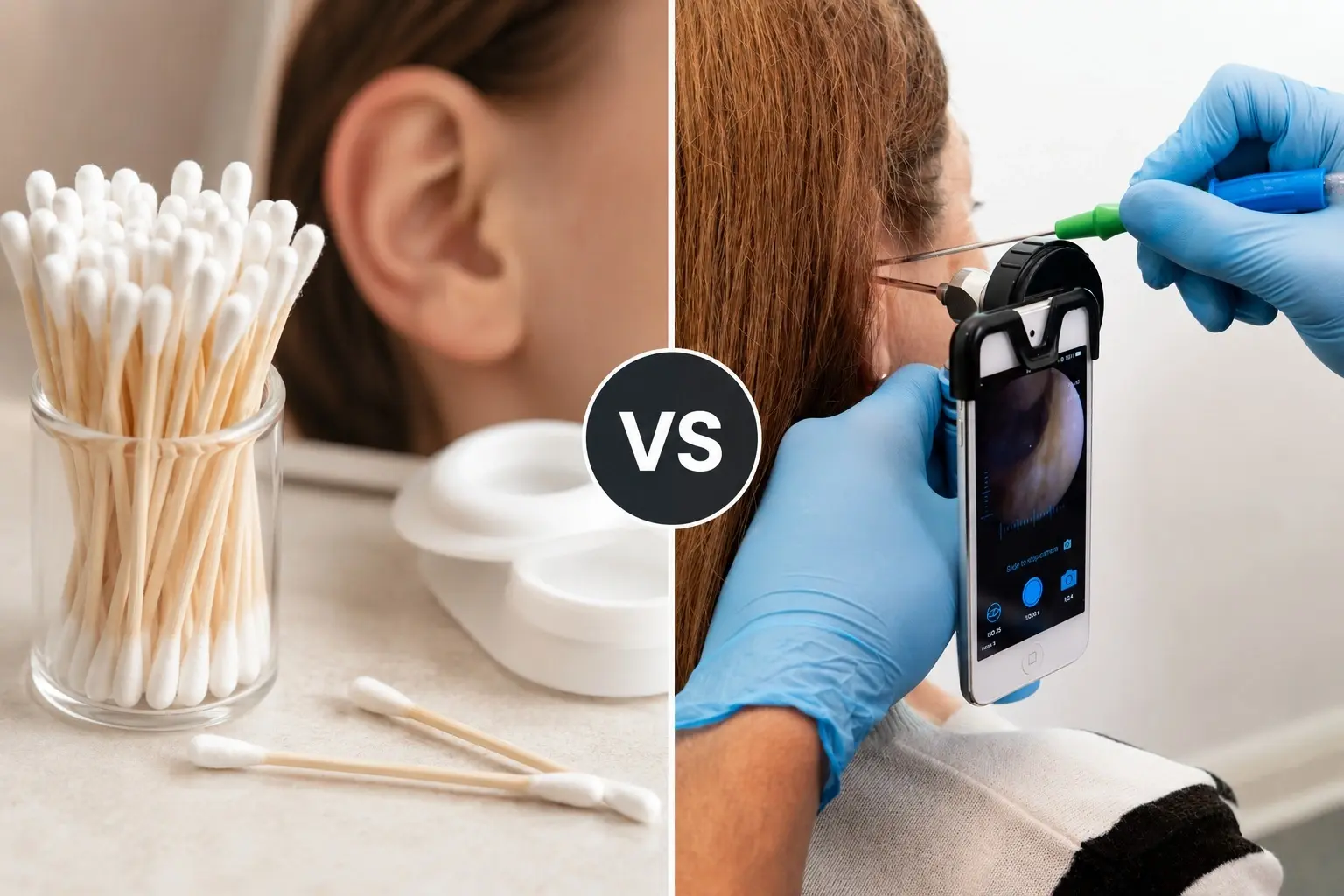
1. Cotton Buds
The most popular DIY method for ear wax removal and one of the most counterproductive. Inserting a cotton bud into the canal to remove wax pushes the wax deeper than it removes, compacted it and then it leads to a blockage. If you use cotton buds at all, limit them to the outer ear only never inside the canal, where they risk compacting wax against the eardrum or damaging it.
2. Ear Drops
Ear drops soften wax so it can migrate out naturally. They are far less invasive than cotton buds and have a genuine, legitimate role but a limited one. Drops may help with mild, soft wax that has not become impacted. They are best used as a first step to prevent further build-up, or to soften wax before a professional ear wax removal treatment. On their own, drops are not enough to remove excess ear wax and can take several weeks to work. In some cases, there is a counterintuitive risk: drops can make ear wax softer which can leave the ear feeling more blocked.
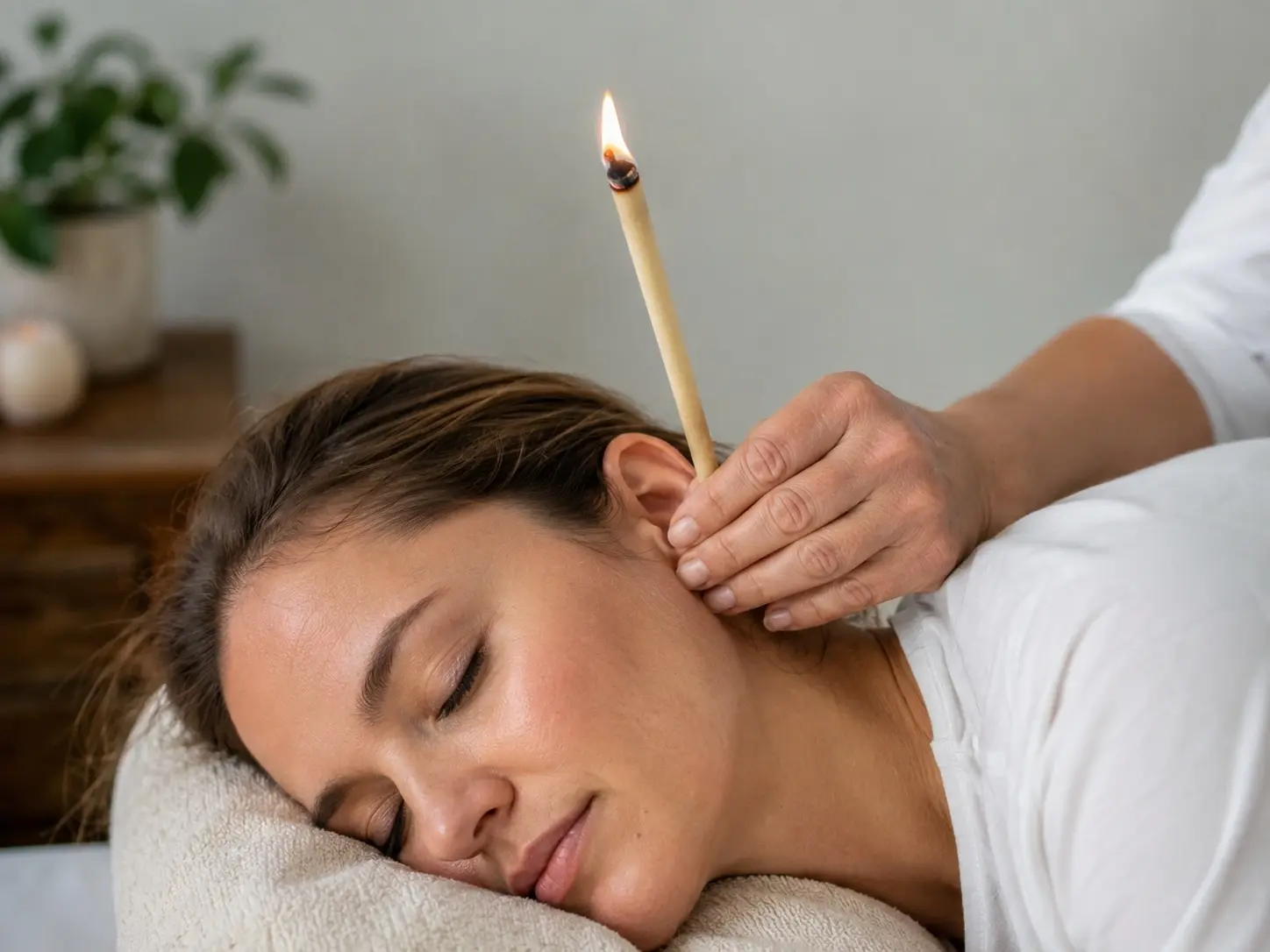
3. Ear Candles (Hopi Candles)
4. Ear Cleaner with a Camera and Spiral Tools
These have gained popularity through viral TikTok and Amazon trends. The kit pairs a small endoscopic camera streaming to your phone with a spiral silicone or steel pick. It looks effective, but self-removal is dangerous the picks can irritate the canal, lead to bleeding or puncture the eardrum. A professional audiologist trains for years before using clinical tools. A phone camera in untrained hands is not equivalent, visibility without expertise is not safety.
5. At-Home Irrigations and Bulb Syringes
These are DIY versions of professional ear irrigation. They are less risky than cotton buds but far from risk-free. Effective, safe irrigation requires clinical knowledge:
- Water that is too warm can cause burns
- Water that is too cold can trigger vertigo
- Unsterile water can cause infection
- The wrong pressure can damage the ear canal or eardrum
Why Do These Methods Fail?
Every DIY method listed above shares the same fundamental problem. They are designed for the mildest form of ear wax, the soft, fresh layer that your ear canal would have likely cleared on its own. Once wax has dried, hardened, or compacted against the eardrum, DIY techniques fall short. And most people don’t realise they have crossed that line until they have already made things worse.
1. DIY Only Works at One End of the Spectrum
Fresh wax is soft and oily. Over time it dries, darkens, and hardens. Once it is pressed firmly against the eardrum or canal wall no amount of olive oil or sodium bicarbonate will dissolve it enough to fall out. Most people still need professional removal even after using drops.
2. The Ear Canal Leaves No Room for Error
3. You Cannot See What You Are Dealing With
Without a medical-grade microscope or endoscope, you cannot tell whether wax is sitting loosely near the opening or fully compacted against the eardrum. A phone camera gives you a picture, but not the clinical knowledge to interpret it or the precision to act on it safely.
4. Repeated DIY attempts compound the damage
Each failed attempt adds a layer of risk. Cotton buds push wax deeper with every use. Over-irrigating with a bulb syringe introduces moisture that can breed bacteria. Spiral tools scratch the canal lining. By the time someone books a professional appointment after weeks of trying at home, the blockage is often more severe and the canal more irritated than it would have been if they had come in first.
5. Using DIY methods can make it worse
Cotton buds push wax deeper. Over-irrigating with a bulb syringe introduces moisture that can breed bacteria. Spiral tools scratch the canal. By the time someone books an appointment after weeks of trying, the blockage is often more severe and the canal more irritated than if they had come in first.
6. Hearing Aid and Earbud Users
These devices push wax inward every time they are inserted. For daily hearing aid wearers or heavy earbud users, wax is being compressed. Hearing Aid users and people wear earbuds always needs professional ear wax removal.
7. DIY Skips the One Step That Matters Most: Assessment
When an audiologist removes wax, the first thing they do is examine the ear — checking for infection, perforation, skin conditions, or anything unusual before starting. Every DIY method skips this entirely. You could be treating what you assume is wax when the real issue is an infection or a perforated eardrum that needs medical attention.
What Professional Ear Wax Removal Actually Involves
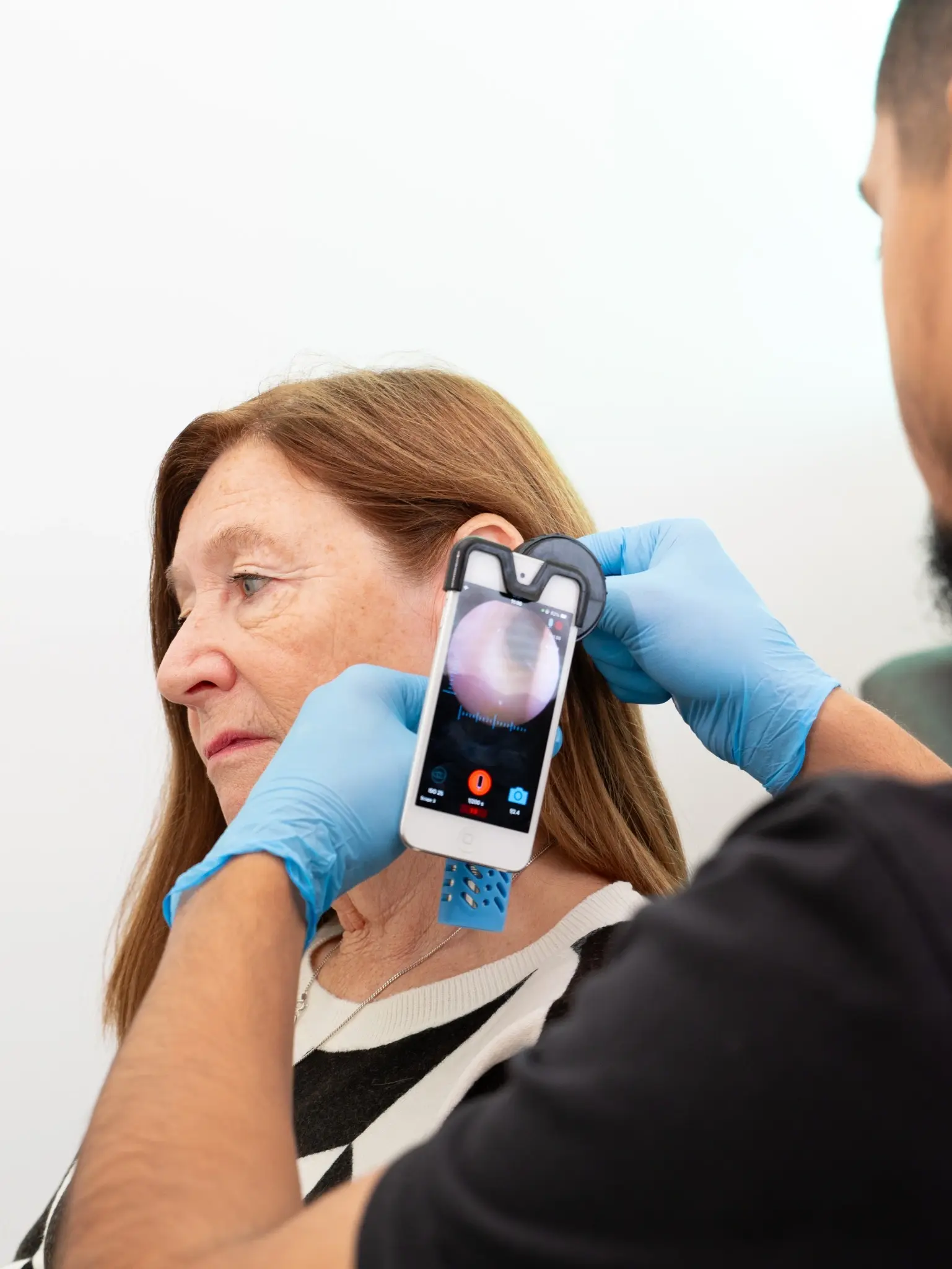
If DIY is unsafe or ineffective for most blockages, the safe and effective alternative is professional removal. There are two main methods: Microsuction and Ear Irrigation, both safe and both suited to different situations.
- Microsuction: The audiologist examines your ear with a microscope or endoscope for a clear view, then uses a gentle, low-pressure suction device to remove the wax. Because no water or chemicals are involved, there is less risk of infection or canal damage which is why microsuction is the preferred method among audiologists.
- Ear Irrigation: This treatment involves uses a specialist electronic irrigator to direct a controlled flow of warm water into the canal, loosening and flushing out the wax.
If you want to learn more about which method is better, then read this blog, “Microsuction vs Ear Irrigation: Which Is Right for You?”
Spiral tools and bulb syringes are essentially at-home versions of microsuction and irrigation. The difference is that professional equipment is clinical-grade and sterilised, and it is used by trained professionals who understand ear anatomy which is exactly what makes DIY versions risky by comparison. Professional removal is also typically painless, with most patients describing only a mild sensation.
Crucially, professional removal begins with an examination a step that identifies infection, perforation, or anything unusual before treatment starts. This is the single most important difference between professional and DIY methods.
Professional Ear Wax Removal Vs DIY Methods
Criteria | Professional Removal | DIY Methods |
Methods | Microsuction, ear irrigation, manual tools under visual guidance | Cotton buds, drops, syringes, ear candles, camera kits |
Effectiveness | High. Clears blockage in one session. Immediate relief | Low. Drops rarely clears it fully. Can take weeks to work |
Safety | Very low risk when done by trained clinicians | Moderate to high risk (injury, infection, burns) |
Assessment | Full ear examination before treatment | No diagnosis before use |
Impacted Wax | Yes, effective for hard/deep ear wax | No. Cannot remove compacted wax |
Hearing Aid Users | Yes. Prevents repeated compaction | No. Wax quickly builds up again |
Risk of Worsening | Minimal | High (pushing wax deeper, irritation) |
Training | HCPC-registered professionals | None |
Best For | Any symptomatic or impacted wax | Mild buildup or pre-treatment only |
Why Do More People Rely on DIY Methods?
If you have tried to get your ears cleared in the UK through your GP recently, you already know how this goes. You call the surgery, explain your symptoms, and get told they no longer offer ear wax removal. You are told to use ear drops for one or two weeks, if that does not resolve it then recommended going private.
Professional ear wax removal is more accessible and more affordable than most people assume. Here’s what you get from private ear clinics:
- The actual typical range for ear wax removal is £50 and £70 for both ears
- You get same-week appointments
- Option for mobile ear wax removal procedures
- The procedure takes under 30 minutes
Book A Professional Ear Wax Removal Appointment If:
- You experience significant hearing reduction in one or both ears
- Drops haven't improved symptoms after 5-7 days
- You've been using cotton buds and suspect you've pushed wax deeper
- You wear hearing aids or use earbuds daily
- You experience pain, ringing, vertigo, or discharge
- You've had ear surgery, perforations, or grommets
To get better clarity on when you should book a professional ear wax removal treatment, read this blog: “7 Signs You Need Professional Earwax Removal”.
Conclusion
DIY earwax removal has a genuinely narrow role. Of all the home methods, only ear drops are worth using and even then, only for mild, soft wax. The rest, from cotton buds to spiral tools, camera kits, ear candles, and home irrigation, are best avoided. They rarely clear a real blockage and too often make things worse.
For anything beyond mild wax, particularly impacted wax, professional removal is the safest, fastest, and most effective choice. So don’t wait for things to get worse. If you’re unsure whether you need professional removal, Direct Ear Care is happy to assess and advise with no pressure to go ahead if your ears are already clear. We provide microsuction and ear irrigation using clinical-grade equipment, performed by HCPC-registered audiologists.
Written and medically reviewed by:

Ibrahim Musa
Audiologist
Frequently Asked Questions
What are the benefits of professional ear wax removal compared to DIY methods?
Professional removal is safer, faster, and more effective. A trained audiologist examines the ear before and after, uses proven methods such as microsuction or ear irrigation under magnification, and resolves most blockages in a single 30- 45-minute appointment.
DIY methods lack the diagnostic step, work only on mild soft wax, and carry risks including canal scratches, infection, and eardrum perforation. Professional removal also finds underlying issues like infection or perforation that home methods miss entirely.
Is it safe to remove ear wax at home using over-the-counter products?
Over-the-counter ear drops like olive oil or sodium bicarbonate are generally safe for mild, soft wax if you have no history of eardrum perforation, grommets, or ear infection. However, they rarely clear the blockage on its own. Drops can also soften wax and may lead temporarily relief. If symptoms persist after five to seven days of use, professional removal is the recommended next step.
Where can I find a local clinic offering professional ear wax removal services?
Look for HCPC-registered audiologists or hearing care providers in your area. Many private clinics including Direct Ear Care in Manchester and Bamber Bridge, Preston offer microsuction and ear irrigation with same-week availability and home-visit options. Since most NHS GP surgeries no longer provide routine earwax removal, private clinics are now the main route to professional treatment across much of England. Choose a clinic using microsuction or electronic irrigation.
How much does private ear wax removal cost in the UK?
Private ear wax removal in the UK typically costs between £40 and £70 for both ears. This usually includes a pre-treatment ear examination, the removal procedure itself, and a post-treatment check. Pricing varies by clinic and region, but most appointments take under 30 minutes with immediate results.
Compared to repeated purchases of ear drops, camera kits, and other DIY products that often do not resolve the blockage, a single professional appointment is often the more cost-effective choice overall.
Costs vary by clinic and region from £50- £80, and a professional appointment usually includes a pre-treatment examination, the removal itself, and a post-treatment check taking under 30 minutes with immediate results. Compared with repeated purchases of drops, camera kits, and other DIY products that often do not clear the blockage, a single professional appointment is often more cost-effective overall. For current pricing, see our pricing.
What are the risks associated with attempting ear wax removal yourself?
DIY removal carries several risks: eardrum perforation, canal irritation, infection, and impact the ear wax deeper. Cotton buds compact wax against the eardrum with every use. Spiral tools and camera-guided picks can scratch or damage the eardrum. Bulb syringes can introduce unsterile water that causes infection, and the wrong water temperature or pressure can trigger vertigo or harm the eardrum.
Related posts
How Often Should Adults Have Their Hearing Checked?
Rechargeable Hearing Aids vs Battery Hearing Aids: Which Is Better?