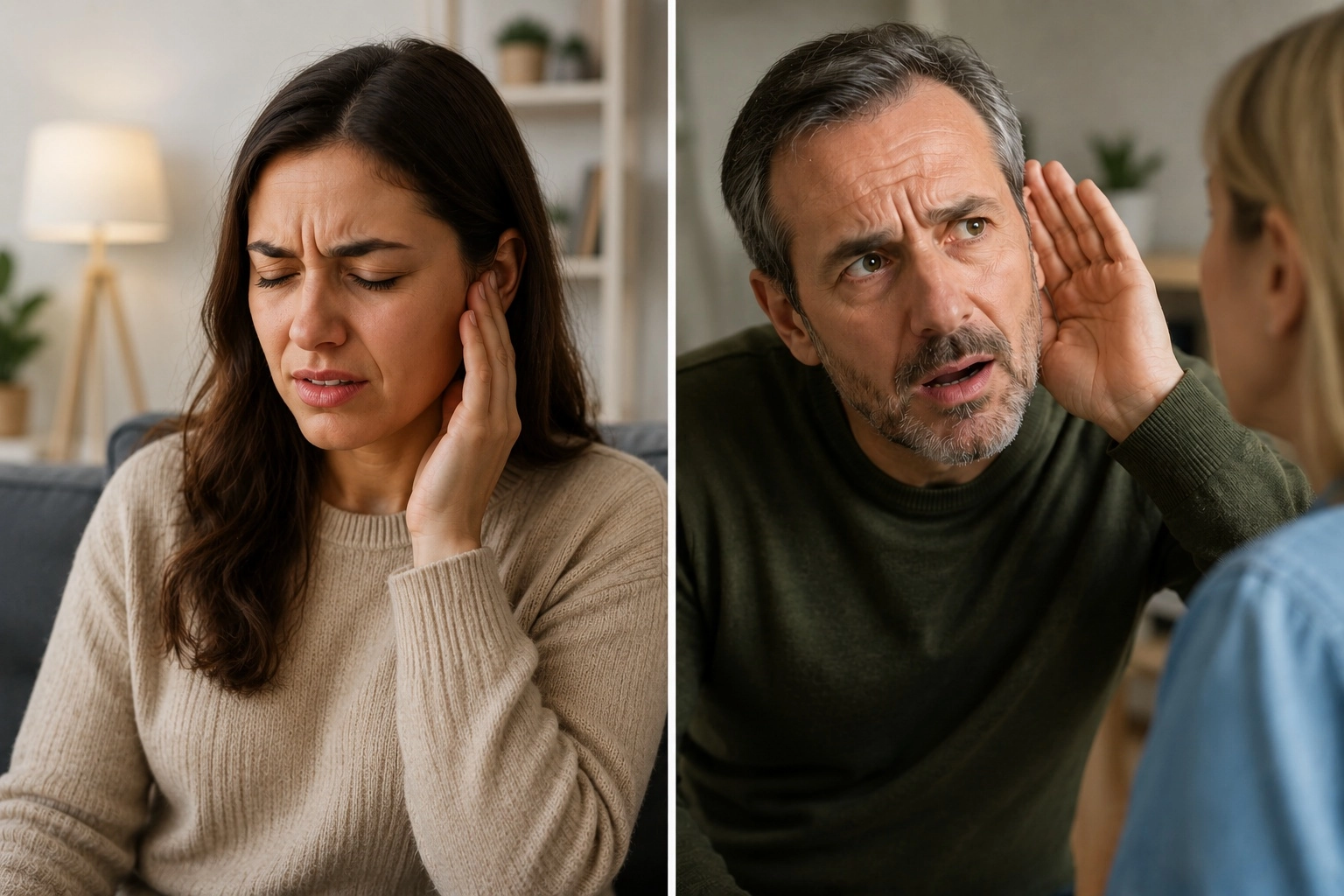
You are watching TV and realise the volume is much higher than usual. Or your ear has felt blocked since your morning shower, and every sound is dull and muffled. The first thing most people wonder is whether their hearing deteriorated.
Often, the answer is far simpler than hearing loss: earwax build-up. The confusion arises because both can cause similar symptoms: muffled sound, reduced clarity, and that frustrating sense of pressure or fullness in the ear.
Because the signs overlap, it is easy to book the wrong appointment or to put off getting your ears checked altogether. This guide helps you spot the key differences, so you know what your symptoms are telling you and which professional to see.
Why Earwax Build-Up and Hearing Loss Feel So Similar
Earwax build-up and hearing loss feel similar, because they both have almost same symptoms and occur in the same area. Earwax build-up temporarily blocks the ear canal, reducing your ability to hear properly. This leads to reduced hearing. Hearing loss, on the other hand happens gradually due to lifestyle, old age, or other physiological issues. Both have similar effects, but the causes are very different. Let’s understand how earwax build-up and hearing loss can feel so similar, yet have different causes.
How does sound normally travel through the ear?
Hearing follows a simple pathway. Sound waves enter the ear canal and travel to the eardrum, causing it to vibrate. These vibrations pass through the small bones of the middle ear to the inner ear, where tiny sensory cells convert them into nerve signals. The auditory nerve carries these signals to the brain, which interprets them as sound, speech, or background noise.
How does ear wax affect hearing temporarily?
- The ear canal becomes partially or fully blocked, preventing sound from passing through clearly
- Everything sounds muffled, distant, or dull like being underwater or hearing through cotton wool
Are you suddenly feeling a blockage inside your ear? Read this detailed guide to know what the best steps to take are.
How hearing loss develop
- As changes happen slowly over time, you may not notice the symptoms day to day.
- Speech loses clarity before it gets quieter voices sound unclear rather than simply softer
- Noisy environments become the biggest challenge, as separating speech from background noise gets harder
Ear Wax Removal vs Hearing Test: The Key Differences
What You’re Experiencing | It’s More Likely Ear wax Build-Up | It’s More Likely Hearing Loss |
How symptoms started | Often appears suddenly, sometimes overnight | Usually develops gradually over time |
How does your ear feel | Blocked, full, pressurised, or uncomfortable | No physical blockage sensation |
How sound is affected | Sounds muffled or distant | Speech sounds are unclear or difficult to distinguish |
Which ear is affected | Often one ear more than the other | Often affects both ears more evenly |
When it becomes noticeable | After showering, swimming, or cotton bud use | During conversations or while watching TV |
In noisy environments | General muffled hearing | Difficulty separating speech from background noise |
This table is a guide, not a diagnosis. If you are unsure, a professional ear examination will give you a definite answer.
It Could Be Both
5 Signs You Probably Need Ear Wax Removal
1. Your ear feels blocked or full
2. Your hearing changed suddenly
3. One ear is worse than the other
4. You hear crackling, popping, or movement
5. You regularly use earbuds, hearing aids, or earplugs
Anything inserted into the ear canal can interfere with the ear’s natural cleaning process and push earwax deeper, where it compacts and becomes harder to clear. Regular users of wireless earbuds, foam earplugs, in-ear headphones, or hearing aids are more prone to build-up.
5 Signs You May Need a Hearing Test Instead
1. Your hearing has declined gradually
2. People sound loud enough, but unclear
3. Background noise makes conversations difficult
4. Both ears seem equally affected
5. Persistent tinnitus without blockage
- Constant ringing, buzzing, high pitch sounds in the ears
- Symptoms persisting for weeks
- Noise present in quiet environments
Why Self-Diagnosing Can Be Misleading?
- Earwax build-up: A physical blockage preventing sound from reaching the eardrum
- Hearing loss: Gradual changes affecting how your ears process and understand sounds.
- Eustachian tube dysfunction: Pressure imbalance between the middle ear and the throat, creating popping or fullness sensations.
- Ear infections: Usually cause discomfort, pressure, and temporary hearing disruptions.
What Happens at an Ear Wax Removal Appointment?
Step 1: Ear examination
Every professional ear wax removal assessment will begin with the audiologist examining your ears. They use an otoscope or a camera-fitted endoscope to check whether earwax is blocking the ear canal and to rule out other causes of muffled hearing.
Step 2: Ear wax removal treatment
- Microsuction: a gentle suction device removes wax under direct magnified vision, with no water used. It is suitable for most patients, including those with sensitive ears or a history of ear surgery
- Ear irrigation: a controlled flow of warm water flushes softened wax from the canal
- Manual removal: small instruments remove wax that is visible near the canal opening
Step 3: Immediate results for many patients
What Happens at a Hearing Test?
1. Discussing Your Symptoms
During a professional hearing test, your audiologist will ask when you first noticed the symptoms and in which situations you find hearing most difficult. This context is an important part of the assessment.
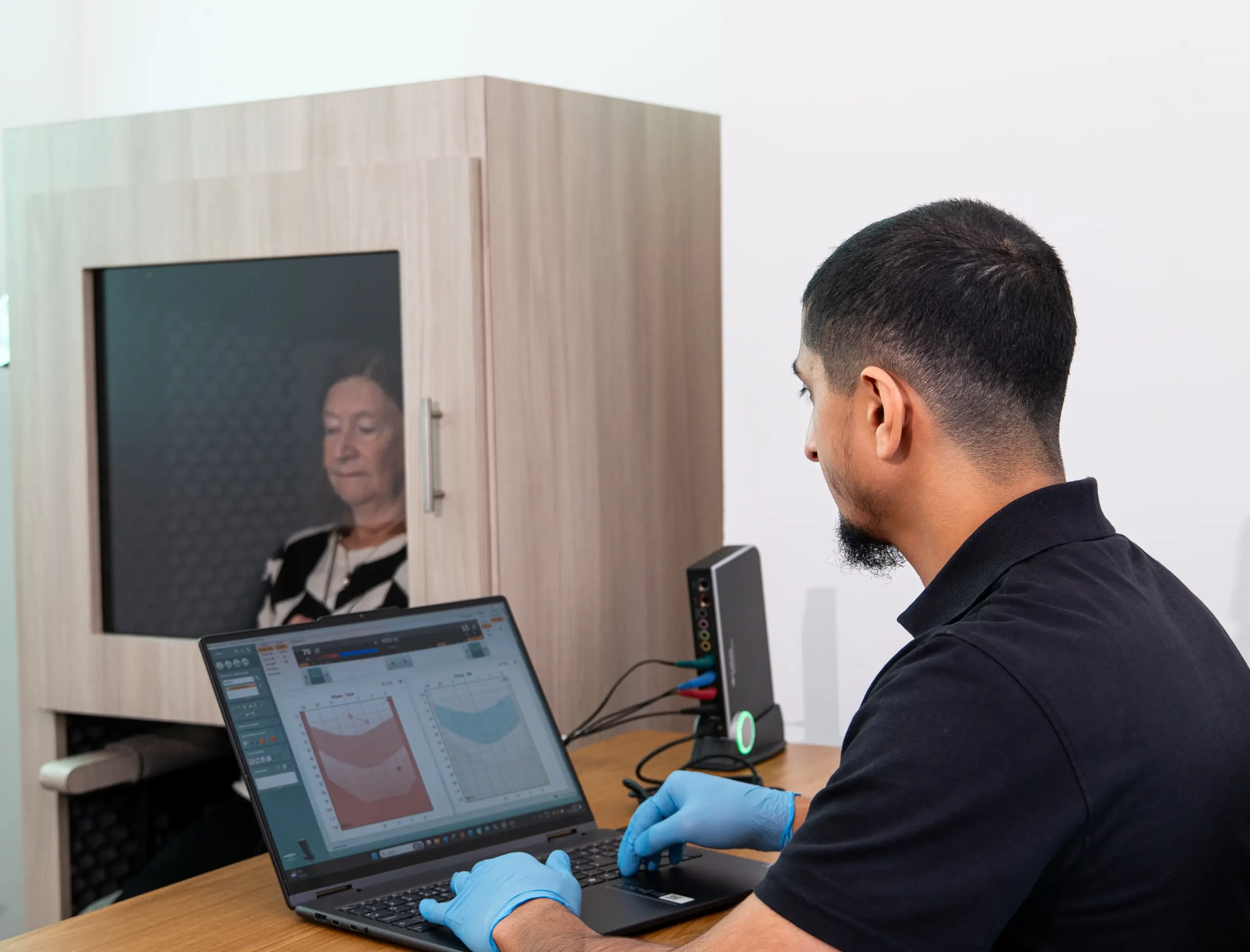
2. The Hearing Assessment
3. Understanding Your Results
Conclusion
When your hearing changes unexpectedly, waiting for it to resolve on its own is rarely the right call. Whether it is earwax or genuine hearing loss, the symptoms feel almost identical which is exactly why guesswork so often leads to the wrong assumption, or the wrong appointment.
The signs in this guide will help you understand which is more likely. But the only way to be certain is a professional ear examination, which can identify the cause precisely and, importantly, tell you if it is both.
If you are unsure whether your symptoms point to earwax or hearing loss, Direct Ear Care can give you clarity and the right treatment in one appointment.
Book Your Free Hearing Test At Direct Ear Care Manchester
Written and medically reviewed by:

Ibrahim Musa
Audiologist
Frequently Asked Questions
How can I tell if I need ear wax removal or a hearing test?
Sudden muffled hearing, pressure, or a blocked sensation usually indicates ear wax build-up inside the ear canal. On the other hand, gradual hearing decline, difficulty in understanding speech, or struggling in busy environments signal auditory ability loss. So, keep an eye on the symptoms you are facing and take a professional assessment to know which treatment suits you the best.
Can ear wax cause temporary hearing loss?
Yes, when ear wax hardens and causes a complete blockage inside the ear canal, it stops sound waves from reaching the eardrum, causing temporary hearing loss. Removing the wax typically restores hearing immediately.
What does blocked hearing from ear wax feel like?
You may notice a sensation of pressure, fullness, or something trapped in the ear canal, alongside muffled or reduced hearing. The physical blocked feeling is what most distinguishes it from gradual hearing loss, which has no sensation of fullness.
Can I remove ear wax at home?
Using a cotton bud or any object to remove earwax yourself is not recommended it pushes earwax deeper and can damage the ear. For mild build-up, olive oil drops can help soften wax naturally. For a blockage, professional earwax removal is the safest option. Direct Ear Care offers both clinic and home visit appointments, using microsuction and other safe methods.
Is a hearing test painful and uncomfortable?
Related posts
How Often Should Adults Have Their Hearing Checked?
Rechargeable Hearing Aids vs Battery Hearing Aids: Which Is Better?