Hearing loss affects how easily you follow conversations at work, keep up at family gatherings, and enjoy music or TV. The right hearing aid can make those moments easier, but with six main styles and dozens of features, choosing one can feel overwhelming.
The best choice comes from three things: your hearing test results, the places you struggle most, and how you live day to day. This guide explains each one, compares the main styles and features, and shows how to get expert help at our Manchester clinic.
Understand Your Hearing Needs First
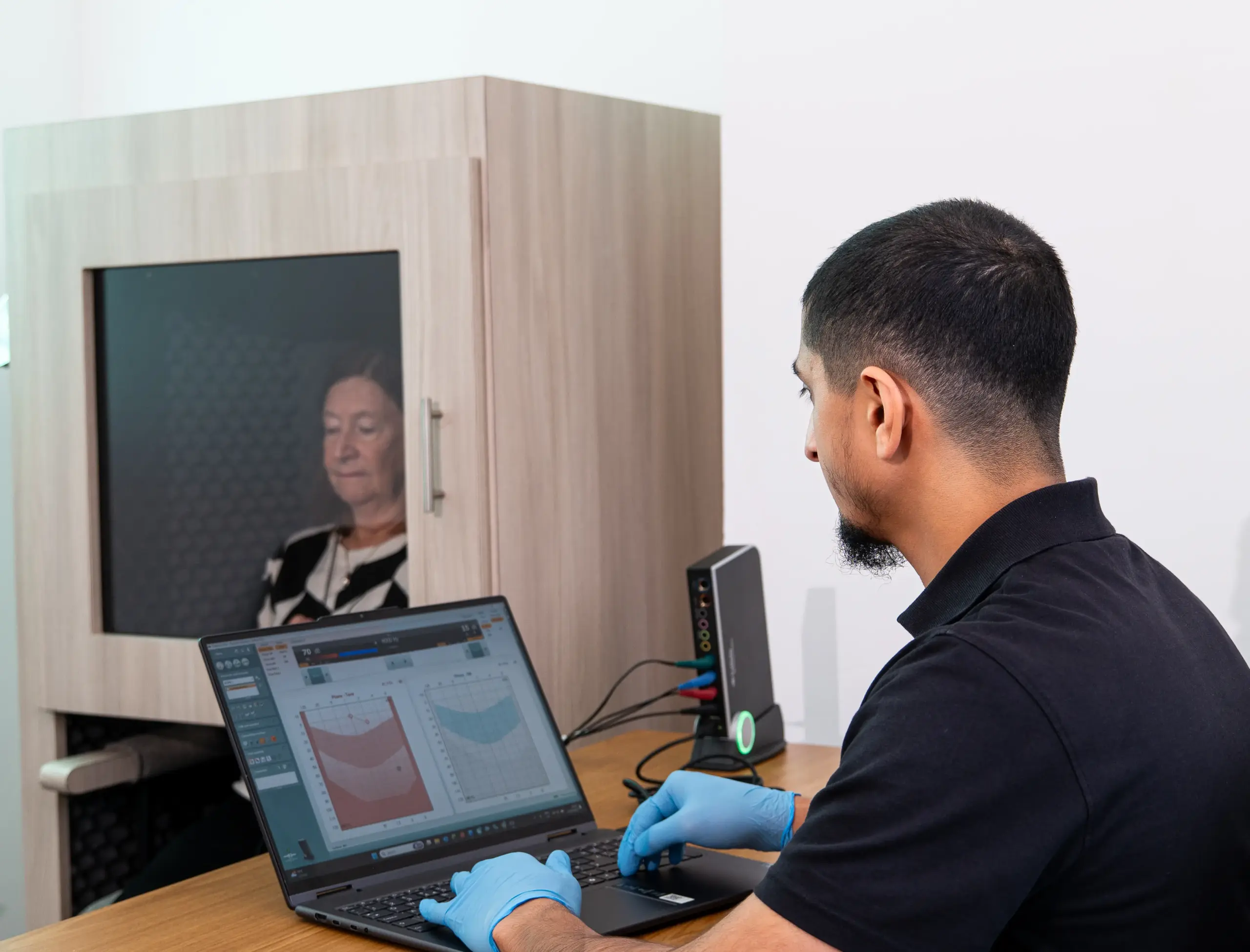
Get a professional hearing test
A hearing test is the essential first step. It shows whether you have hearing loss, which pitches are affected, how severe it is, and how well you understand speech. It also checks for treatable causes, such as earwax or an ear infection, that need treatment rather than a hearing aid.
Think about the type and degree of your hearing loss
Think about where you struggle most
Think about your lifestyle
Types of Hearing Aids to Consider
There are two main types of hearing aids: those that sit behind the ear and custom-made ones that sit in the ear. As a rule, the smaller the hearing aid, the more discreet it is, but the less power and fewer features it can hold.
Style | Where it sits | Visibility | Hearing loss it usually suits |
Behind-the-ear (BTE) | Behind the ear, with a tube to an ear mould or dome | Most visible | Mild to profound |
Receiver-in-canal (RIC) | Small case behind the ear, thin wire to a speaker in the canal | Discreet | Mild to severe; some powerful models suit profound |
In-the-ear (ITE) | Custom shell filling the outer bowl of the ear | Visible from the side | Mild to severe |
In-the-canal (ITC) | Custom shell in the opening of the ear canal | Less visible | Mild to severe |
Completely-in-canal (CIC) | Custom, deeper in the canal | Barely visible | Mild to severe |
Invisible-in-canal (IIC) | Custom, deepest in the canal | Virtually invisible | Mild to moderate |
Behind-the-ear (BTE)
Receiver-in-canal (RIC)
Custom styles (ITE, ITC, CIC and IIC)
Key Hearing Aid Features to Look For
Speech clarity and personalised programming
Noise reduction and directional microphones
Bluetooth and smartphone connection
Bluetooth hearing aids can stream calls, music and TV audio to your ears, and most can be adjusted through an app. Check they work with your exact phone model before you buy.
Rechargeable or disposable batteries
Rechargeable hearing aids charge overnight, so there are no tiny batteries to change. They suit you if you have limited dexterity or eyesight. Disposable batteries suit the smallest custom styles and are handy if you are often away from a charger.
Read next: “Rechargeable Hearing Aids vs Battery Hearing Aids: Which Is Better?”
Telecoil for hearing loops
A telecoil lets your hearing aids pick up sound straight from a hearing loop. Many banks, theatres, places of worship and ticket counters have one. If you use these places often, ask for a model with a telecoil.
Budget, NHS or Private
NHS hearing aids in Manchester are free through a GP referral, with free batteries, repairs and follow-up care. The range is limited to behind-the-ear and style and waiting times can be longer than private care.
Private hearing aids gives you better sound quality, help in noisy environments and a wider choice of styles including the smaller custom models, and faster appointments. Private hearing aid prices at £1,150 to £3,950 for a pair. Our guides to how much hearing aids cost in Manchester and NHS vs private hearing aids in Manchester compare both routes in detail.
Why Choose Direct Ear Care in Manchester?

Choosing a hearing aid is only one part of getting the right support. Our HCPC-registered audiologists help you decide based on your hearing, your daily life and your preferences.
- Professional Hearing Assessments: Receive a professional assessment to better understand your hearing needs and determine whether hearing aids may be appropriate.
- Personalised Hearing Aid Recommendations: Get guidance on hearing aid styles and features based on your hearing profile, lifestyle, and preferences.
- Expert Fitting and Adjustments: Ensure your hearing aids are fitted and adjusted for comfortable, effective amplification.
- Hearing Aid Maintenance and Support: Get assistance with device care, troubleshooting, and ongoing maintenance.
- Ongoing Hearing Care: Continue to receive support as your hearing needs or requirements change over time.
Free Hearing Aid Trial: Get a 2-week free hearing aid trial to ensure the hearing aid you buy is best-suited for your daily needs.
Conclusion
Choosing the right hearing aid starts with your hearing test, then your daily listening challenges, lifestyle and budget. The smallest or most feature-packed device is not automatically the best. The right one gives you suitable amplification, feels comfortable and works in the places that matter to you, with aftercare to keep it that way.
Get expert help choosing your hearing aid in Manchester
Frequently Asked Questions
How do I choose the right hearing aid for my needs?
What type of hearing aid is best for hearing loss?
No single style is best for everyone. Behind-the-ear and receiver-in-canal hearing aids suit the widest range of hearing loss and offer the most features. Custom in-ear styles are more discreet but hold less power. The best type depends on your hearing test, ear shape, dexterity and how discreet you want it to be.
Do I need one hearing aid or two?
If you have a hearing loss in both ears, we recommend having hearing aids in both ears.They help with speech in noise and with telling where sounds come from. Your audiologist can advise based on your test results.
What hearing aid features should I look for?
Choose features for the situations you find hardest. Directional microphones and noise reduction help in busy places. Bluetooth makes calls and TV easier. Rechargeable batteries add convenience, and a telecoil helps in places with hearing loops. More features do not always mean better hearing, so pick the ones you will use every day.
Are Bluetooth hearing aids useful?
They can be, if you use a smartphone for calls, music or video. Bluetooth hearing aids can stream sound straight to your ears, and some can be adjusted through an app. Check they are compatible with your exact phone before you buy and ask which features you will actually use.
Do I need a hearing test before buying hearing aids?
Yes. A hearing assessment shows whether you have hearing loss, its type and how severe it is. It guides the type of hearing aid and the amount of amplification you need. Choosing a device without it makes it harder to find one that suits you.
Are smaller hearing aids always better?
No. Discreet styles such as ITC and CIC appeal to many people, but they hold less power and can be harder to handle. Some people find larger devices easier to insert, remove and operate. Your audiologist can help you balance appearance with hearing needs, comfort and practicality.
Where can I get help choosing a hearing aid in Manchester?
Direct Ear Care offers hearing assessments, personal recommendations, fitting, adjustments and ongoing care at our Manchester clinic. Book an appointment to talk through your hearing needs and options.
Written and medically reviewed by:

Ibrahim Musa
Audiologist
Related posts
Why are My Hearing Aids Not Working? Common Problems and Fixes

10 Signs You May Need Hearing Aids